
A Nation Exposed: How Compliance Lapses and Poor Training Unravel U.S. Defenses

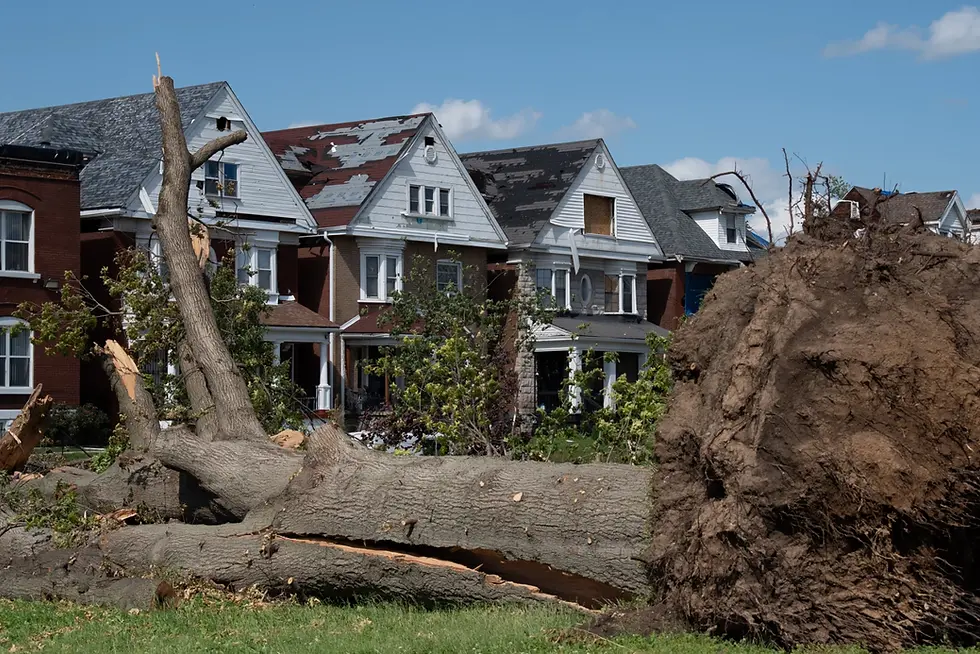
When an EF-3 tornado bore down on St. Louis in May 2025, the city’s emergency sirens stayed eerily silent. The failure wasn’t an act of nature but of preparedness: an investigation later revealed that key emergency staff were off-site, communications broke down, and no one was at the console to trigger the alarms. It was a preventable disaster, one of many recent examples where outdated protocols and inadequate training turned risks into real-world crises. From police departments and power grids to corporate boardrooms, America’s institutions are showing stress fractures. A pattern of neglected compliance and lax oversight is exposing dangerous vulnerabilities across the country’s public and private sectors. And as domestic instability rises, these fissures in enforcement and training carry increasingly high stakes for public safety and organizational survival.
When Oversight Fails, Crises Follow
No sector has been immune to the consequences. In law enforcement, 2025 saw a whiplash in accountability efforts. After high-profile police abuses over the past few years, federal investigators had finally begun addressing “pattern or practice” violations in city departments. By late 2024, the Justice Department’s Civil Rights Division found credible evidence of systemic misconduct in multiple police forces, from Memphis to Trenton, with plans for consent decrees to reform training, use of force, and oversight. But in 2025, a dramatic reversal unfolded. The newly reconstituted DOJ leadership moved to dismiss or retract these very investigations, halting planned consent decrees in Louisville, M0inneapolis and beyond. Sweeping federal oversight of police training, discipline, and hiring practices was denounced as “overbroad,” and essentially scrapped. Local departments were left to police themselves, even those just found to have violated citizens’ constitutional rights.
Demonstrators in Memphis protest the death of Tyre Nichols in 2023, a tragedy that prompted federal scrutiny of police practices. In 2025, new DOJ leadership pulled back on such oversight, dropping investigations and consent decrees in multiple departments. Critics say the move removes a vital lever to enforce better training and accountability.
The retreat of federal enforcement sends an unsettling signal. “When bad actors in uniform fail” to uphold the law, the Justice Department will still respond, officials insist. Yet critics note that without binding reforms, many departments may lack incentive to improve training or root out misconduct. The risk isn’t abstract: insufficient training and oversight can have deadly results. In Maryland last year, two separate confrontations at fast-food restaurants turned fatal due to escalations by security guards. In one case, a guard in Hyattsville pepper-sprayed a loitering patron, then ended up shooting him during a struggle, an encounter police said the guard’s aggressive actions needlessly provoked. In another, a Baltimore guard was shot and killed by a 15-year-old after a scuffle. Both incidents underscore how lapses in training and protocol can turn minor incidents into tragedies. “The right training can mean the difference between saving a life and facing a lawsuit,” notes Shawn Gray, a veteran trainer, pointing to de-escalation techniques that might have prevented these outcomes. The private security sector, much like public police, faces a pressing need for higher professional standards, and consequences when they’re not met.

Critical Infrastructure: Flirting with Failure
It’s not only our social fabric at risk; hard infrastructure is showing dangerous cracks as well. Nowhere was this clearer than in Texas, where regulators assured the public that steps had been taken to avoid another grid catastrophe like the 2021 winter blackout. But an August 2025 state audit revealed a sobering truth: many of those safeguards exist only on paper. Texas oil and gas regulators, tasked with enforcing new winterization mandates for natural gas supply, critical for keeping power plants running in a freeze, were essentially taking industry at its word. Companies were allowed to decide for themselves what “winter prepared” meant, and out of 8,732 site inspections over two winters, regulators issued just two violations. Every operator that claimed to have done something to winterize passed muster, no matter how minimal the effort. Crucially, inspectors weren’t even required to verify whether facility staff had completed mandated weather preparedness training, “instead tak[ing] the gas companies’ word for it.” The audit warned that this hands-off approach “increases the risk that some staff will not be prepared for severe winter weather events,” and urged swift action. In effect, Texas has been gambling with its grid, hoping self-regulation will succeed where enforced compliance has faltered.
The grid is just one example of critical infrastructure under strain from lax oversight. A wave of ransomware attacks in 2025 targeted core systems that Americans rely on daily, hospitals, transportation, utilities, often finding easy prey. In Nevada, a major cyberattack discovered in August crippled state services from DMV licensing to background checks, with recovery costs topping $1.5 million. An after-action review cited exactly what security experts have long feared: aging IT systems, fragmented networks, and insufficient coordination allowed a single intrusion to explode into a statewide crisis. Nationally, ransomware incidents surged by roughly 30% last fall, and nearly half of all attacks hit critical sectors like energy, manufacturing, health care, or transport, sometimes threatening public safety or national security.
While cyber defenses are as much a technical issue as a training one, humans are invariably the weakest link. Each phishing email clicked by an unwary employee, each unpatched server forgotten in the IT inventory, reflects a breakdown in compliance culture. When workers aren’t trained rigorously and systems lack oversight, hackers find the gaps. As one 2025 cybersecurity report bluntly concluded, “resilience is not optional”, organizations must continuously drill and update response plans because attacks evolve every day. A 2025 state audit found Texas regulators largely failed to enforce winterization, allowing gas companies to self-certify readiness. Of 8,732 inspections, only 2 violations were issued, even as dozens of critical facilities had no weatherproofing in place. Such gaps leave the power grid vulnerable to extreme weather failures.

Corporate Compliance Erosion and Legal Risk
In boardrooms and C-suites, the pendulum of regulation swung toward a deregulatory extreme in 2025, raising its own kind of peril. Early in the year, new executive orders and court decisions curtailed the powers of several federal watchdog agencies. The Consumer Financial Protection Bureau, for example, narrowly survived a constitutional challenge that could have dismantled its funding, while enforcement of a new corporate transparency law was abruptly paused. Perhaps most dramatically, a February 2025 order put federal anti-bribery (FCPA) investigations on a 180-day freeze.
This de facto compliance holiday was short-lived, by mid-summer DOJ had rescinded the pause amid public outcry, but it injected chaos into corporate risk calculations. “From the CFPB’s near-elimination to the FCPA pause to suspended [Corporate Transparency Act] enforcement, federal agencies retreated from oversight at unprecedented speed,” one year-end compliance analysis observed.
Paradoxically, many companies found deregulation made their jobs harder, not easier: a patchwork of state regulators and foreign authorities stepped in to fill the void, and the rules of the game kept whipsawing with each legal twist.
Compliance officers faced a flood of questions, Do we relax standards or maintain them? Will leniency today become liability tomorrow?, all while trying to uphold basic ethics amid competitive pressures. The smartest firms recognized a simple truth: rolling back compliance can be a trap. As one veteran counsel noted, “Periods of deregulation often create more complexity… Every regulatory change, whether adding or removing requirements, necessitates a systematic response, updated procedures, retrained employees, revised documentation.”
If companies misread a temporary lax in enforcement as carte blanche, they risk future penalties, reputational damage, and operational surprises. Indeed, by late 2025, the Justice Department signaled that when anti-corruption enforcement resumed, it would be more selective and faster-moving, targeting conduct that truly “harms U.S. national interests”, with sharper teeth for offenders. In short, the cost of noncompliance hasn’t disappeared; it’s merely become more unpredictable. Organizations that maintained robust internal controls despite the political crosswinds are likely to fare better than those that gambled on laxity.
Emergency Preparedness: Tested and Found Wanting
Meanwhile, America’s ability to respond to disasters, natural or man-made, is only as strong as the plans on the shelf and the people executing them. Here, too, 2025 delivered harsh lessons. The St. Louis tornado in May was one; remarkably, many of the city’s outdoor sirens had been broken for months, including 11 units along the very path the tornado tore through. The external review concluded bluntly that “many, if not all, the failures” in St. Louis’s response were preventable. The city’s Emergency Management Agency lacked clear protocols and even failed to follow federal incident command frameworks required by law during the crisis. Human error compounded technology failures: with key staff absent, a delayed manual trigger attempt was misrouted, so the alarms never sounded. In the end, five people lost their lives in the storm. One can’t say if working sirens and better-coordinated responders would have saved all of them, but undoubtedly minutes mattered that day, and the systems meant to warn and protect fell apart when put to the test.
Nor was St. Louis alone. Across the country, emergency managers confronted cascading challenges: early 2025 brought deadly winter tornadoes in Kentucky and Missouri, summer saw record heatwaves and wildfire smoke choking Eastern cities, and the Atlantic churned out an above-average hurricane season. Reports emerged of warning systems that didn’t warn, understaffed response teams, and confusion between agencies in crisis moments. In Texas, legislators aired alarms after a July 4th mass shooting and subsequent localized panic exposed “systemic failures in disaster warnings and response,” prompting hearings on why emergency alerts and inter-agency communication broke down under pressure. A federal High-Risk assessment in October flagged that FEMA and other agencies face workforce and training shortfalls that could hamper responses to simultaneous disasters. The common thread: having a plan on paper isn’t enough if people aren’t adequately trained and protocols aren’t relentlessly practiced. Unfortunately, tight budgets and complacency often lead to dusty binders on shelves, until the day they’re desperately needed.
Adapting Through Training: From Vulnerability to Resilience
Each of these failures, in policing, corporate governance, infrastructure, emergency management, traces back in part to a human factor: a failure to enforce standards and to educate people on handling worst-case scenarios. In a volatile domestic landscape, adaptive compliance frameworks and rigorous training are not bureaucratic formalities; they are lifelines that can decide whether an institution weathers a crisis or falls apart under stress. “The cost of not training is too high,” as one security training organization starkly put it after a spate of violent incidents. Indeed, many organizations are now rediscovering that investment in people and processes yields dividends far beyond legal compliance, it builds a culture of readiness.
Leaders in the professional risk and security sector are responding by revamping how training is delivered. There is growing emphasis on scenario-based drills, continuous learning, and third-party assessments to ensure complacency doesn’t seep in. For example, the Department of Homeland Security’s 2025 Homeland Threat Assessment warned that both foreign and domestic violent extremists “will continue to call for physical attacks on critical infrastructure” in the U.S, a sobering backdrop that has companies running realistic tabletop exercises to stress-test their crisis plans. Forward-leaning firms are hiring specialists to audit their compliance programs, simulate breaches or insider threats, and retrain staff on updated protocols. There is also recognition that effective training must start at the top: corporate boards and public sector executives alike are being schooled in risk oversight, whether it’s understanding AI-driven threats or the nuances of incident command systems. The best defense, it turns out, is an organization that learns and adapts faster than the risks it faces.
One promising development is the rise of dedicated training partners that bridge the gap between policy and practice. Eight Point Solutions, a veteran-led security training and intelligence firm based in Maryland, is one example of the new wave of compliance and preparedness specialists. Led by former military and law enforcement professionals, they specialize in translating hard lessons from the field into actionable training programs for both government and private-sector teams. Their approach emphasizes “real-world training, anytime, anywhere,” with mobile teams delivering exercises in everything from tactical decision-making to emergency response coordination. Crucially, they focus on the human decision points in crises, teaching security guards how to defuse conflicts rather than escalate them, for instance, or drilling incident commanders on communication under duress. “We train professionals to handle high-stress situations with calm, control, and compliance, not just force,” the company explains, underscoring that proper preparation can avert tragedy on the ground. In an era when a single mistake by a front-line employee can unleash millions in damages or a national headline, such targeted workforce development isn’t a luxury; it’s a strategic imperative.

Hard Truths and a Way Forward
The hard truth is that resilience requires reinvestment in compliance systems that don’t just exist on paper, and in people who know how to do the right thing under pressure. America’s recent stumbles have shown what happens when that investment is neglected. Yet they have also spurred something positive: a reckoning and a resolve among many leaders to reinforce the guardrails before the next test comes. Policymakers are pushing to update safety regulations and restore watchdog capacity where it’s been lost. Companies and agencies, jolted by close calls, are revisiting their crisis plans and compliance checklists. And across industries, a new conversation is taking shape about how to build a culture of preparedness, one that prizes continuous learning and doesn’t wait for tragedy to enforce lessons.
If there is a silver lining to the turmoil of 2025, it’s that the wake-up calls are being heard. The question now is whether we act on them. Will institutions beef up training and truly empower compliance officers, or will “business as usual” inertia win out? The stakes could not be higher. In an age of domestic volatility, political polarization, climate shocks, cyber warfare, the next breach, breakdown, or scandal is always looming. We may not be able to predict every crisis, but we can certainly prepare for them. Doing so means facing our vulnerabilities head-on and taking systemic action to shore them up. It means replacing outdated protocols with dynamic ones, and rote drills with lived readiness. Most of all, it means recognizing that our greatest assets in any crisis are well-informed, well-trained people at every level of an organization.
To our community of professionals, from risk managers and compliance officers to executives and public servants, the charge is clear. Now is the time to champion rigorous training, demand accountability, and invest in adaptive compliance frameworks that evolve as fast as the threats we face. The cost of preparedness is always dwarfed by the cost of failure. And as recent events have made plain, the bill for failure is one this nation can no longer afford to pay.


Comments